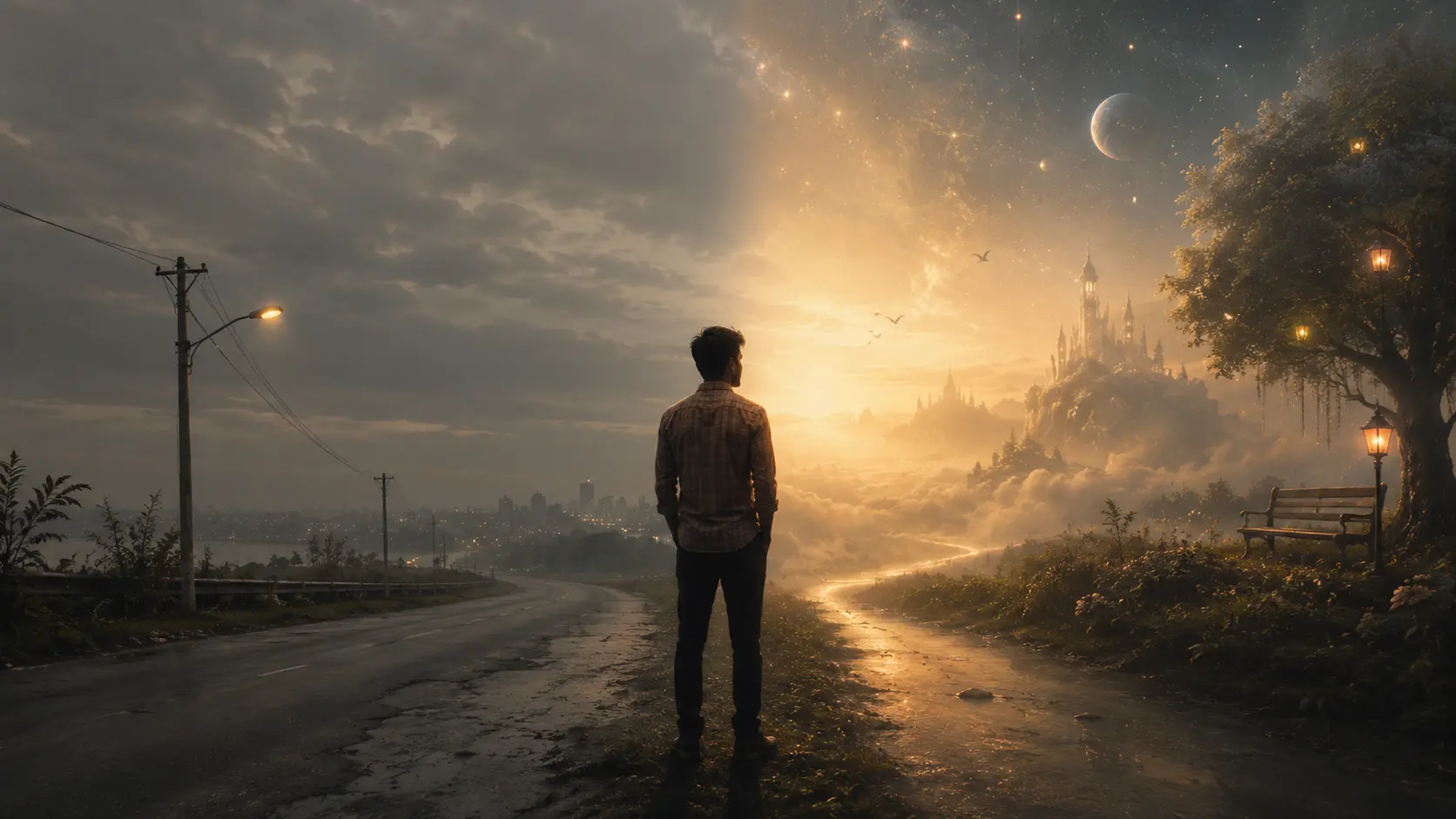
There is a version of my life that no one has ever seen.
It doesn’t happen on paper. It doesn’t happen in conversations. It happens quietly, constantly, inside my head, while I’m listening to music, while I’m trying to fall asleep, while I’m walking, while I’m eating dinner. A story is always running. It never really stops.
I have never told anyone this. Not my family. Not my closest friends. Today, I’m telling you.
“A story is always running in my head. It never really stops.”
What Is Maladaptive Daydreaming?
Psychology has a name for this: maladaptive daydreaming.
It describes a pattern where a person doesn’t just imagine things occasionally — they build detailed, immersive, ongoing fictional worlds, often triggered by music or repetitive activity, and often lasting far longer than a typical daydream. Some stories can stretch on for weeks. Some, like mine, for months.
Unlike ordinary daydreaming, the kind everyone does while waiting in traffic or zoning out during a boring meeting, this kind of daydreaming can begin to interfere with real life. It can pull attention away from relationships, responsibilities, and presence in the moment. And often, the person experiencing it knows this is happening, and still can’t fully stop.
It is not officially classified as a disorder in psychiatric diagnostic manuals yet. But researchers who study it increasingly link it to childhood loneliness, unspoken emotional needs, and a mind that learned early on to build its own company because real company wasn’t available.
That last part is where my story begins.
My Story: The Hero Who Always Ends Up Alone
My daydreams didn’t start recently. They started in childhood, in moments when I was alone and had no one to tell what I was thinking, what I wanted, what I was afraid of. So instead of saying it out loud, I started building it. Quietly. Inside.
In every story I’ve ever built, I am the hero. I have power. I have money. I have everything a person could want.
And somehow, I still end up losing something.
That’s the part that surprises people when I explain it. You’d think a fantasy world would be where everything goes right. But mine never does, not completely.
In my stories, I lose relationships. I lose family. Somewhere near the end, I always find myself walking away from everyone, toward mountains, toward some distant place where nobody knows my name. Alone, but by choice. Powerful, but isolated. Successful, but empty-handed in the one way that matters most.
I’ve built stories that lasted six to eight months. Ongoing. Evolving. A whole life running parallel to my real one, quietly, without pause, through songs, through silence, through nights I was supposed to be sleeping.
I have tried to stop. I really have. But I can’t seem to pull myself out completely.
It’s Not Just Imagination, It’s a Feeling You Can’t Name
Here’s the part that took me the longest to understand about myself.
This isn’t happening only when I’m bored or unoccupied. It happens all the time, while I walk, while I eat, while I try to sleep, while music plays. There is no off switch. The story is simply always there, running somewhere underneath everything else I’m doing.
“There’s an emptiness — the same one that existed before the story began, and the same one that’s still there after it ends.”
And here’s what almost nobody talks about: the feeling afterward.
No relief. No guilt, exactly. Just a kind of emptiness, the same emptiness that was there before the story started, sitting there again once it ends. Sometimes I don’t even fully recognize it while it’s happening. It just settles in quietly, and somewhere underneath it, there’s a sense that whatever I actually needed, I still don’t have it.
The daydream gives me a world where I have everything. But when it ends, I’m reminded, gently and repeatedly, that the real world still feels like it’s missing something the story couldn’t give me either.
Why We Build These Worlds
If you’ve experienced anything close to this, you might be wondering, why does the mind do this? Why build an entire alternate life instead of just relaxing, or thinking about nothing?
The honest answer, based on what researchers have found and what I’ve lived: it starts as a form of self-protection.
When a child doesn’t have someone to talk to, when their thoughts, wants, and fears have no safe place to land, the mind often finds another way to process them. It builds a world where those feelings can exist. Where the child, or the person that child grows into, can be powerful instead of powerless. Chosen instead of overlooked. In control instead of at the mercy of everyone and everything around them.
It’s not weakness. It’s not something broken.
It’s a mind that learned, very early, how to keep itself company.
That’s what I believe happened to me. I didn’t have someone to say my thoughts to. So my mind built someone — a version of me — who could live out everything I couldn’t say, couldn’t ask for, couldn’t have.
The Part Nobody Talks About – The Emptiness After
This is the part I’ve never said to anyone until now.
The story always ends the same way, with the version of me walking away. Losing the people. Choosing the mountains, the anonymity, the distance. Even in a world I fully control, I still write myself into loneliness.
I don’t fully know why. Maybe because somewhere inside, loneliness feels more familiar than connection. Maybe because even in imagination, I can’t quite let myself believe I get to keep everything, the power, the love, the people, all at once.
And when the story ends, whether I finish it or simply drift out of it, the emptiness doesn’t go away. It was there before the story started. It’s there after. The story doesn’t fix it. It just gives it somewhere to live for a while.
Is It a Problem? Or Is It Who You Are?
I’m not writing this to tell you maladaptive daydreaming needs to be “cured” or eliminated. I don’t fully know if that’s even the right way to think about it.
What I do know is this: if your mind does this, if you build worlds, if you live entire lives in the space between your ears, if music or silence sends you somewhere no one else can follow, you are not broken. You are not alone, even though it might feel like the loneliest thing in the world.
“You built that world because you needed somewhere to put everything you couldn’t say. That’s not weakness. That’s survival.”
But I also think it’s worth asking, gently, without judgment: what would it feel like to say some of it out loud? To someone who won’t interrupt, won’t fix, won’t judge, just listens?
I don’t have a complete answer. I’m still inside this myself, most days. But I know that keeping something hidden for over two decades has its own kind of weight. And today, writing this, is the first time I’ve set a small part of that weight down.
Closing: The Story You Haven’t Told Anyone
If you recognized yourself somewhere in this article, the constant stories, the hero who somehow always ends up alone, the emptiness that shows up before and after, I want you to know something clearly:
You are not the only one.
Whatever world you’ve built inside your mind, whatever version of yourself lives there, whatever you’ve never said out loud to a single person, it doesn’t have to stay locked away forever.
Sometimes the first step isn’t fixing anything. It’s just being heard, once, by someone who isn’t going to judge the story you’ve been carrying.
— Sandip Sahani
If you’ve never told anyone what runs through your mind, I’m here to listen. No judgment. No advice you didn’t ask for. Just space for your story. Talk to me.